
LABCIMTECH

Digital technology connected to experimental science.

LabCimTech integrates software development, data and computational methods with LabCim's scientific and engineering activities, keeping digital interpretation connected to experimental evidence.

Why it exists

A digital front within LabCim's scientific ecosystem.

Experimentation produces measurements, images and records that need to be organized, interpreted and transformed into traceable technical knowledge.

LabCimTech responds to that need by bringing scientific software, modeling and digital technologies closer to the problems investigated in the laboratory.

This front is not a separate entity or a software vendor. It acts as an integration layer across materials science, well engineering, data analysis and interpretation support.

From experiment to digital

A rationale for turning evidence into interpretable tools.

The sequence represents a general pathway. Each project defines its stages according to the research question, available data and application context.

  1. Experiment

    Evidence produced under conditions defined by the study.

  2. Measurement

    Technical recording of properties, images, parameters or observations.

  3. Data

    Organization of records for traceable analysis.

  4. Modeling

    Use of models and computational methods where relevant.

  5. Software

    Implementation of reproducible workflows for calculation, analysis or visualization.

  6. Interpretation

    Critical reading of results through scientific domain knowledge.

  7. Application

    Support for research, well engineering and technical decision-making.

Not every project follows every stage, and no digital tool replaces scientific validation.

Digital capabilities

Capabilities published only when connected to documented content.

The capabilities below are presented as research support fronts, not as commercial promises or generic products.

  • Data organization and structuring

    Preparation of experimental data and metadata for analysis, traceability and technical reuse.

  • Data analysis and visualization

    Quantitative, graphical or visual reading of results connected to the research question.

  • Computational modeling

    Integration of models when they help interpret the behavior of cementitious systems.

  • Scientific software

    Transformation of analysis methods into reproducible and documentable tools.

  • Analytical workflow automation

    Controlled sequencing of processing, calculation and verification stages.

  • Computational methods and machine learning

    Used only when supported by a documented project or publication, while preserving experimental validation.

LabCimTech environment

Digital infrastructure as part of scientific infrastructure.

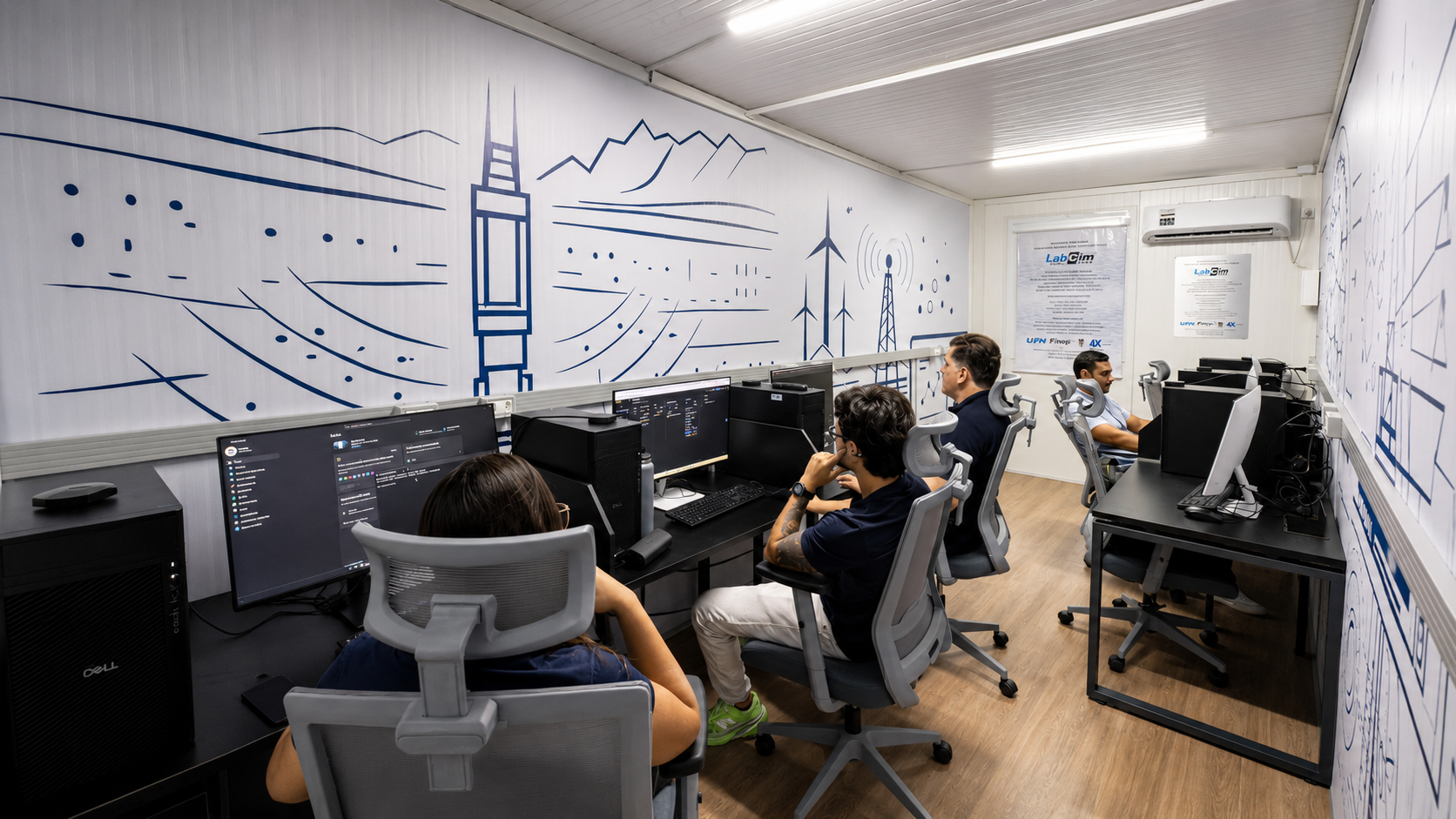
The LabCimTech environment provides a physical setting for work with data, modeling and software within LabCim.

The photograph documents workstations and people in real activity without naming or assigning roles to the individuals shown.

LabCimTech environment with people working at computer stations.
Environment dedicated to data, modeling and scientific software development at LabCim. Credit: Alice Galvão
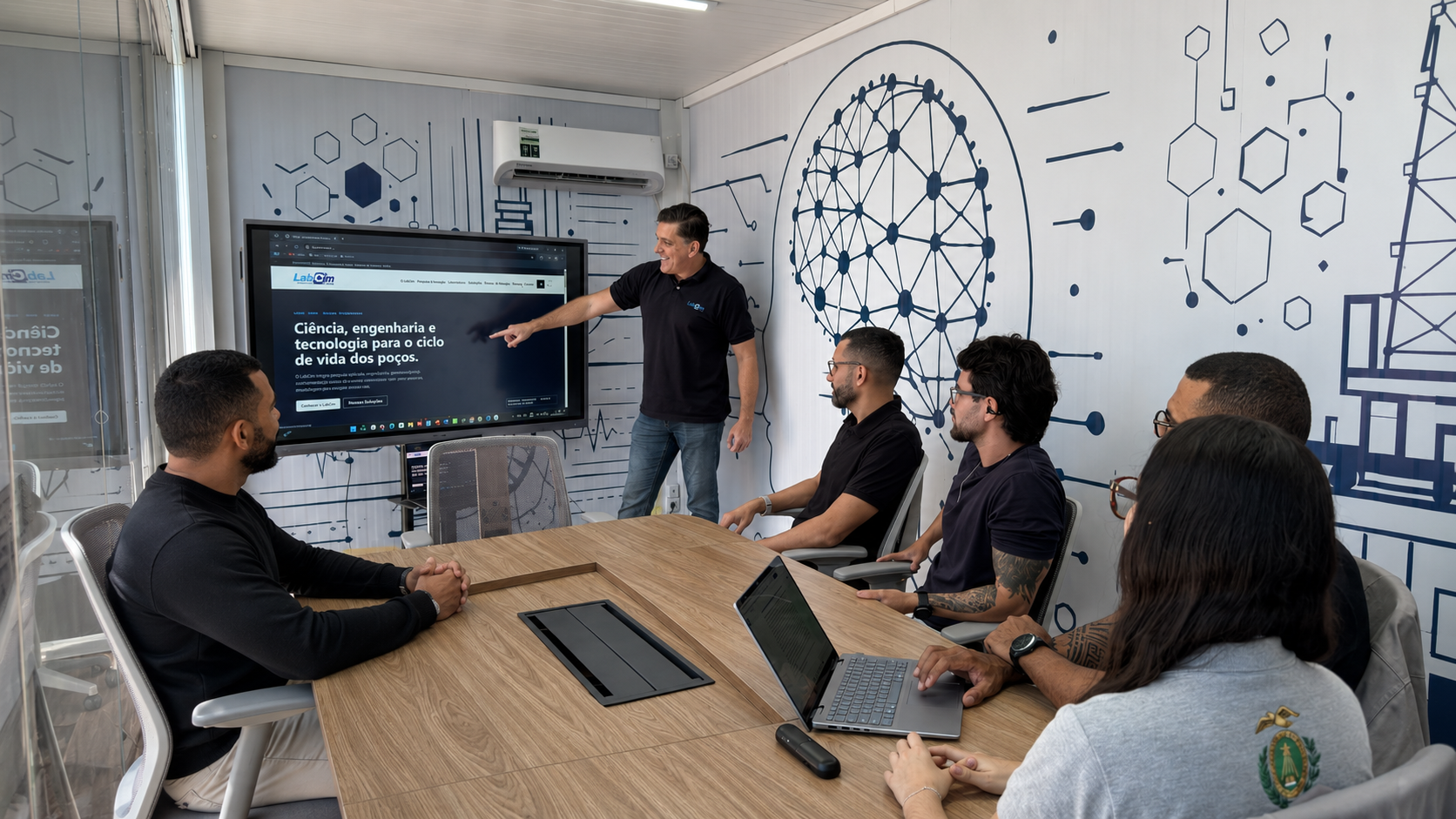
A team meeting in the LabCimTech environment follows an institutional presentation on a screen.
Collaboration among people, technology and technical discussion at LabCimTech. Credit: Alice Galvão

Problem-driven development

Software starts from a scientific or engineering need.

Digital development begins with concrete problems, technical requirements, available data and validation criteria.

Collaboration among people, scientific domain knowledge and implementation keeps software connected to the evidence that gives it meaning.

Conceptual development workflow

  1. Problem
  2. Requirements
  3. Data
  4. Model
  5. Implementation
  6. Validation

Science and software

Digital interpretation remains connected to scientific validation.

Digital tools extend analytical capacity, but their outputs need to remain tied to evidence, technical domain knowledge and methodological limitations.

  • Data interpreted within the experimental context.
  • Models used as support, not as substitutes for evidence.
  • Documentable and reproducible software when published.

Confirmed tools and platforms

A digital portfolio published from documented evidence.

Only tools with sufficient public records appear on this page. Internal or future initiatives remain outside the public portfolio.

Data and image-analysis tool

Carbon Depth

Digital platform associated with carbonation-depth quantification in cementitious materials through image analysis.
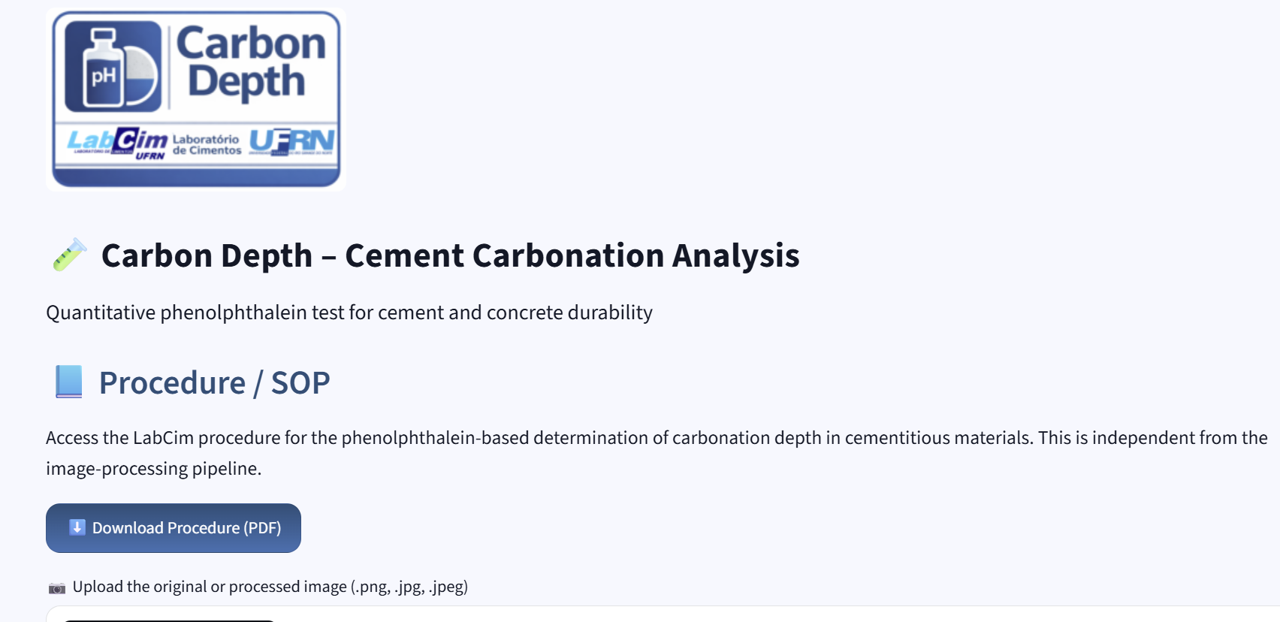
Carbon Depth application interface for carbonation depth analysis.
Problem addressed
Quantifying carbonation depth in cementitious materials from images and reproducible measurements.
Main function
Support processing, depth extraction, kinetic analysis and interpretation of carbonation-related results.
Editorial status
Public/documented by an approved scientific publication
Scientific basis
Accessible and reproducible measurement of carbonation depth in cementitious materials using an open-source image analysis framework

Continue exploring

Connect the digital dimension to LabCim's experimental research.

Digital work becomes meaningful when it remains linked to scientific questions, experimental capabilities and the well engineering contexts investigated by the laboratory.