About LabCim
Science and technology for cementitious systems.
LabCim is a research, development and innovation environment at the UFRN Institute of Chemistry, affiliated with NTCPP and focused on experimentation, engineering, well cementing and scientific training.
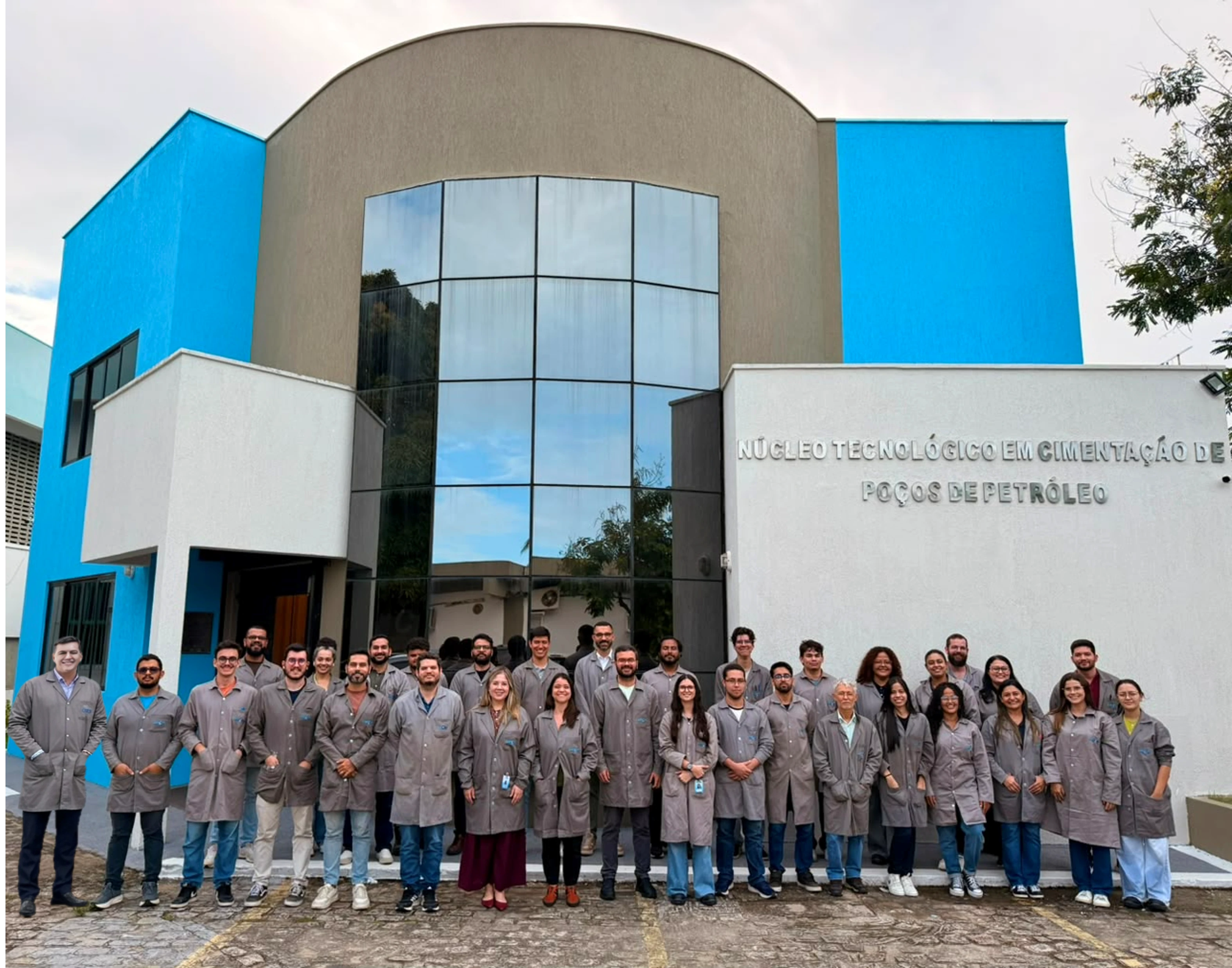
Who we are
An integrated research, development and innovation ecosystem.
LabCim connects materials formulation, testing under representative well conditions, performance assessment and digital technologies. This integration supports scientific and engineering questions across different stages in the development of cementitious systems.
Its activities bring together research, development, innovation, experimentation, engineering and scientific training, with attention to advanced materials, severe environments, well integrity and well lifecycle.
- Research
- Development
- Innovation
- Experimentation
- Engineering
- Scientific training
History
A trajectory built within UFRN.
From its creation in the former Department of Chemistry to its current affiliation with NTCPP, LabCim has expanded its scientific and technological fronts while maintaining its connection with materials and well cementing.

-
1999
LabCim is established
The laboratory was established in the context of the former Department of Chemistry at the Federal University of Rio Grande do Norte.
-
2012
Affiliation with NTCPP
Since 2012, LabCim has been affiliated with NTCPP, the Institute of Chemistry and the Federal University of Rio Grande do Norte.
-
Today
New scientific and technological fronts
Current fronts encompass advanced cementitious systems, high-pressure/high-temperature (HPHT) conditions, steam wells, geothermal applications, carbon capture, utilization and storage (CCUS), well integrity and digital technologies.
Integrated R&D model
From materials formulation to the integration of data, research and engineering.
Scientific work is organized as a connected path in which each dimension produces evidence for the next.
-
Materials
Formulation and development of materials and cementitious systems for well applications.
-
Severe conditions
Representative testing under severe environments and well conditions, including HPHT contexts.
-
Integrity and lifecycle
Assessment of material performance and integrity throughout the well lifecycle.
-
Digital technologies
Computational tools and integration across data, research and engineering.
Application contexts
Capabilities connected to energy and integrity challenges.
LabCim's scientific and technological capabilities can be applied to different operating conditions and stages of the well lifecycle.
- Oil and gas
- Steam wells
- Geothermal applications
- CCUS
- HPHT environments
- Well integrity
Institutional affiliation
LabCim is part of UFRN's scientific and academic structure.
Since 2012, the laboratory has been affiliated with NTCPP and the Institute of Chemistry at the Federal University of Rio Grande do Norte.
-
Federal University of Rio Grande do Norte
The federal public university with which LabCim is affiliated.
-
Institute of Chemistry
The current academic context for the laboratory's activities.
-
NTCPP
The center with which LabCim has been affiliated since 2012.
-
LabCim
An integrated research, development and innovation environment.
Discover LabCim
LabCim in perspective.
Discover more about the environment, infrastructure and activities that connect research, scientific training and technological development at LabCim.
Continue exploring
Explore LabCim's research fronts and experimental capabilities.
The institutional trajectory extends into research, innovation, infrastructure and evidence generation.